Pura Besakih, The Mother Temple of Bali
Written By
Maria Febronia
Created
Apr 04, 2018
Last Update
Jan 28, 2026
Pura Besakih, The Mother Temple of Bali
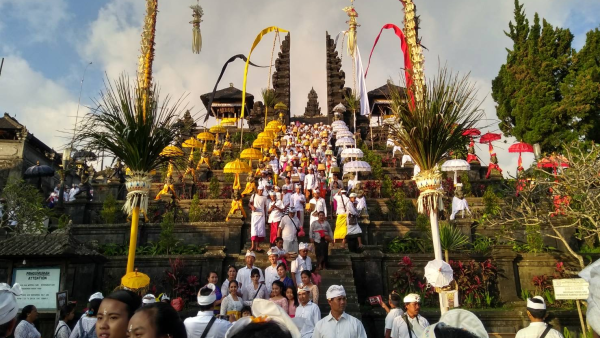
Pura Besakih, often referred to as The Mother Temple of Bali, is the most sacred Hindu temple complex on the island. Located on the slopes of Mount Agung in Karangasem, the temple offers a breathtaking mountain backdrop that enhances its spiritual presence.
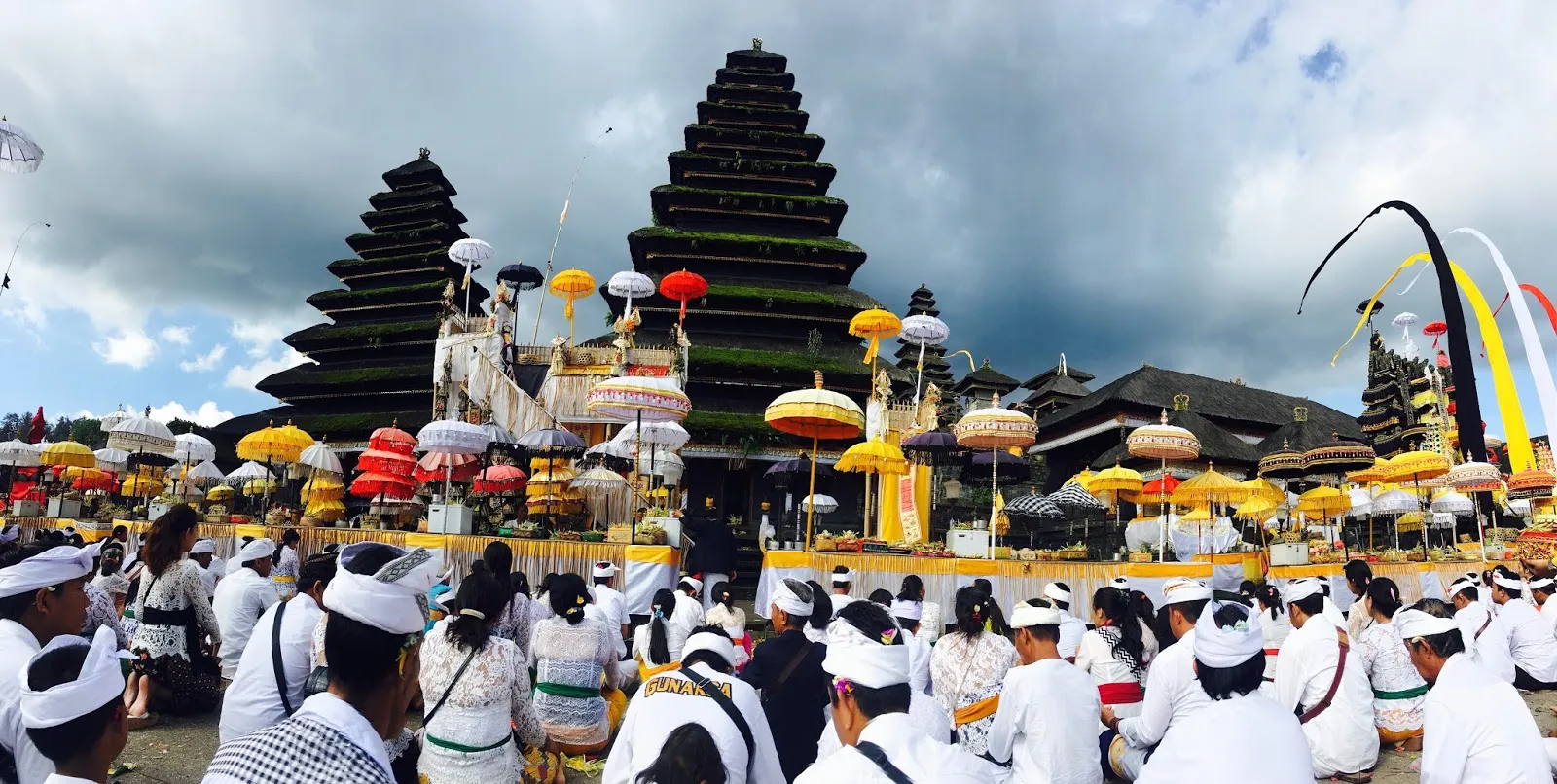
As the central place of worship for Balinese Hindus, Pura Besakih is more than a religious site. It is the spiritual heart of Bali. During full moon days, pilgrims from across the island gather here to pray. The atmosphere becomes even more vibrant during Odalan, the temple’s anniversary celebration, when the entire complex is adorned with intricate decorations, offerings, and ceremonial ornaments.
The Spiritual Center of the Island
Pura Besakih is recognized as the most important temple complex in Bali. At its core are three main temples representing the Hindu Trinity, or Tri Murti.
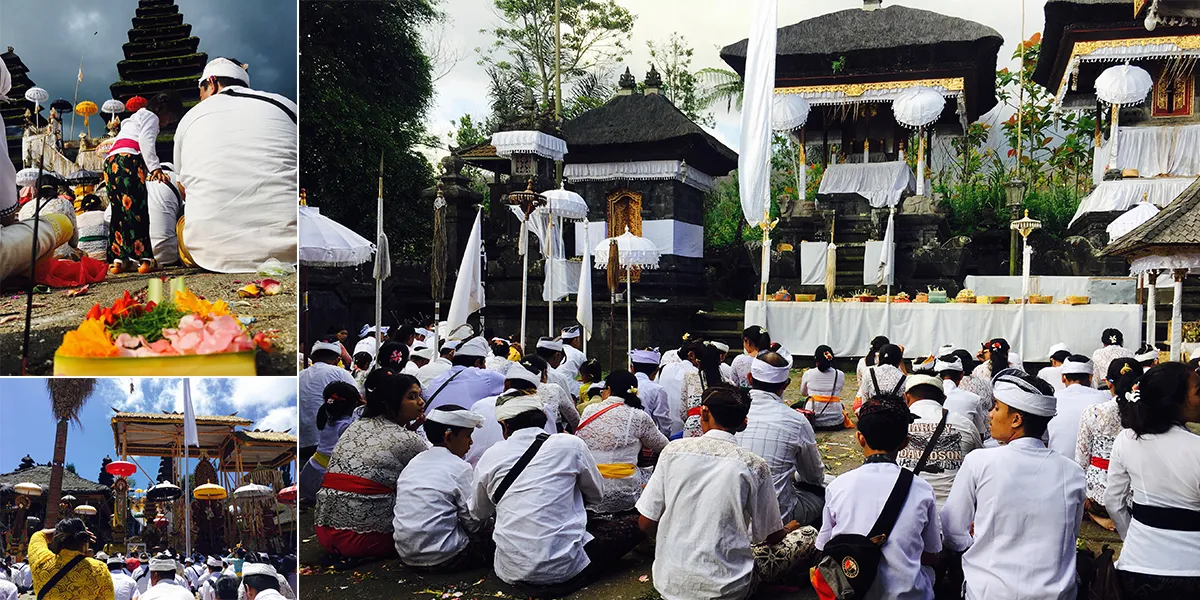
- Pura Penataran Agung, located at the center, symbolizes Sang Hyang Widi Wasa, represented by white banners.
- Pura Kiduling Kreteg, positioned to the right, represents Brahma, the god of creation, marked by red banners.
- Pura Batu Madeg, standing firmly at the back, represents Wisnu, the god of preservation, symbolized by black banners.
Together, these temples form the spiritual axis of Balinese Hinduism, reinforcing Pura Besakih’s role as the Mother Temple of the island.
Witnessing Odalan: A Personal Journey
During a past Odalan celebration in March, the spiritual journey began from Pura Ulun Danu Batur in Kintamani. I was fortunate to be invited by my Balinese partner and his family to take part in the full sequence of ceremonies.
This marked my first journey to Kintamani for such a significant religious occasion. Odalan at Pura Besakih takes place during Purnama of Sasih Kedasa, the tenth full moon according to the Balinese Caka calendar. We departed from the Nusa Dua area, and the journey took approximately three hours through Bali’s changing landscapes.
A Living Ceremony of Color and Devotion
The temple complex is easy to locate, as Pura Besakih is widely known not only as a sacred site but also as one of Bali’s most significant cultural landmarks. Upon arrival, the scale and beauty of the decorations were overwhelming.
Ceremonies at Pura Besakih are always rich in color and symbolism. Penjor bamboo poles and umbul-umbul flags sway gently in the mountain breeze. Pilgrims patiently wait for their turn to pray, carrying offerings and sacred boxes. Every corner of the temple is adorned with carefully arranged ornaments, reflecting devotion, gratitude, and respect for the divine.
Standing among the crowd, surrounded by prayers, music, and movement, it becomes clear that Pura Besakih is not simply a place to visit. It is a place where faith is lived, shared, and passed down through generations.
Why Pura Besakih Matters
Pura Besakih is not only a religious destination but a reminder of how deeply spirituality shapes daily life in Bali. To witness a ceremony here is to understand the island beyond its beaches and tourism. It is to see Bali at its most sincere, where tradition, belief, and community come together in harmony.